The garden was John Stevens Henslow's idea, Charles Darwin's mentor at Cambridge, and by most accounts the reason Darwin ended up on the Beagle at all. Henslow thought the university's cramped, city-centre garden was beneath the study of botany, and pushed for a larger site; the University bought sixteen hectares south of the city in 1831, though it took another fifteen years of legal wrangling before planting actually began, in 1846. The Glasshouse Range along the northern boundary came later, rebuilt in the 1880s under curator R.I. Lynch into the timber-and-glass structure still standing today.
The garden's newest building sits at the opposite end of that history: the Sainsbury Laboratory's Garden Café, a board-marked concrete addition by Stanton Williams that won the RIBA Stirling Prize in 2012, a Victorian glasshouse and a Stirling Prize winner, a few hundred metres apart, both still doing the same job of framing plants in light.

Interior of the Glasshouse Range, its Victorian timber structure framing a path lined with terracotta pots and ferns in the summer light.
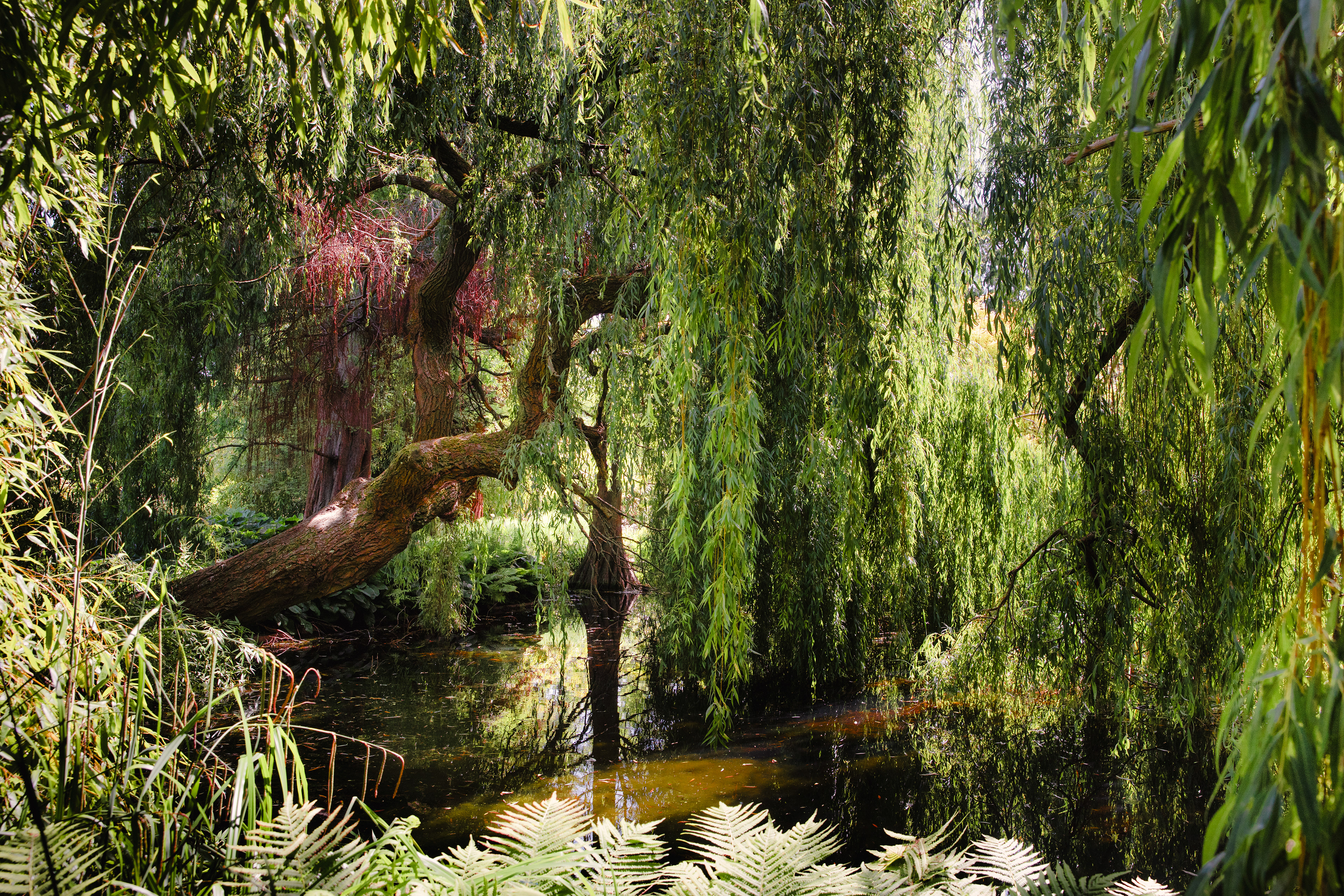
A weeping willow trailing over the Garden's lake, its branches filtering the afternoon light onto the water below.
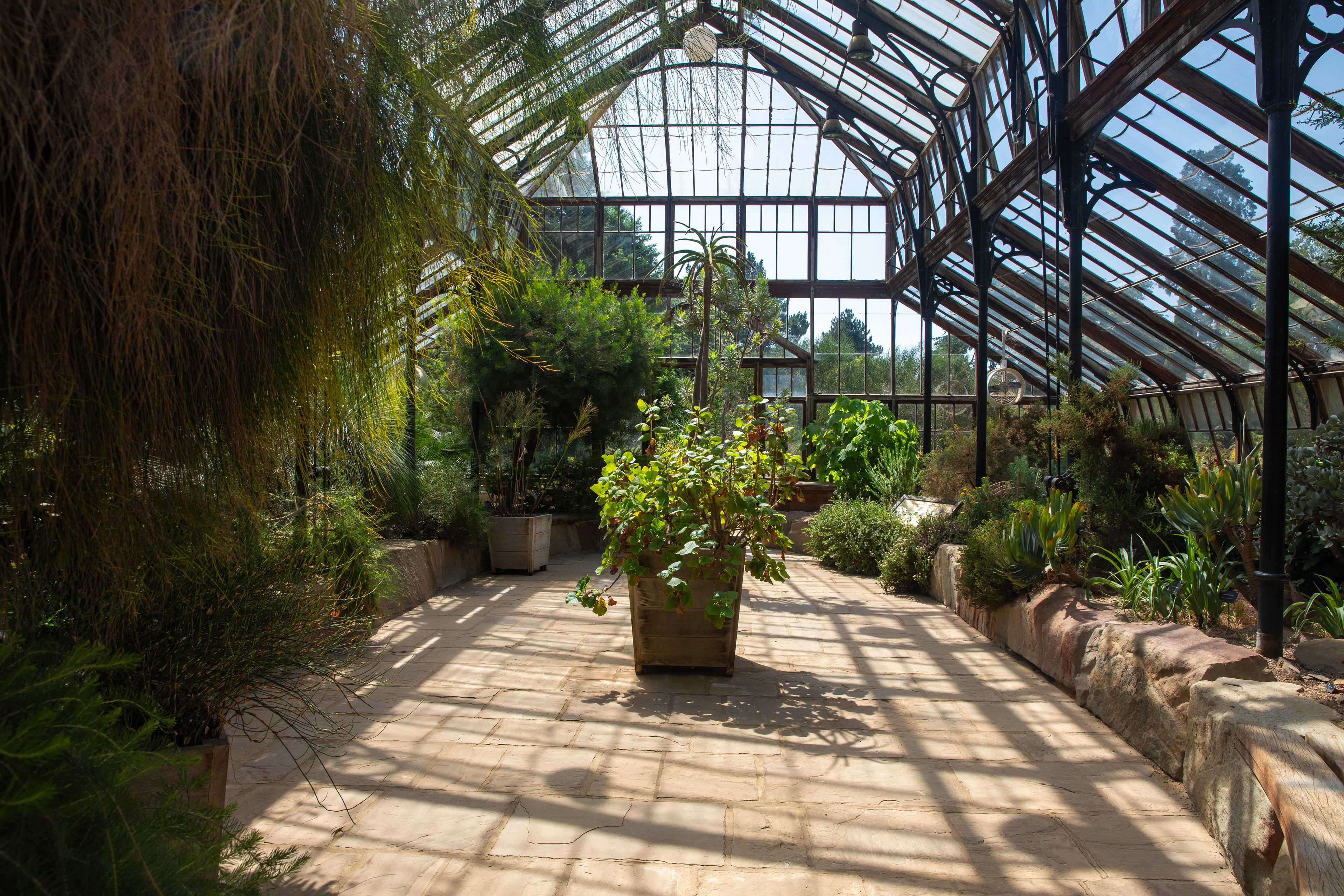
Inside the glasshouses, a potted citrus tree stands at the centre of a sunlit path bordered by raised stone beds.
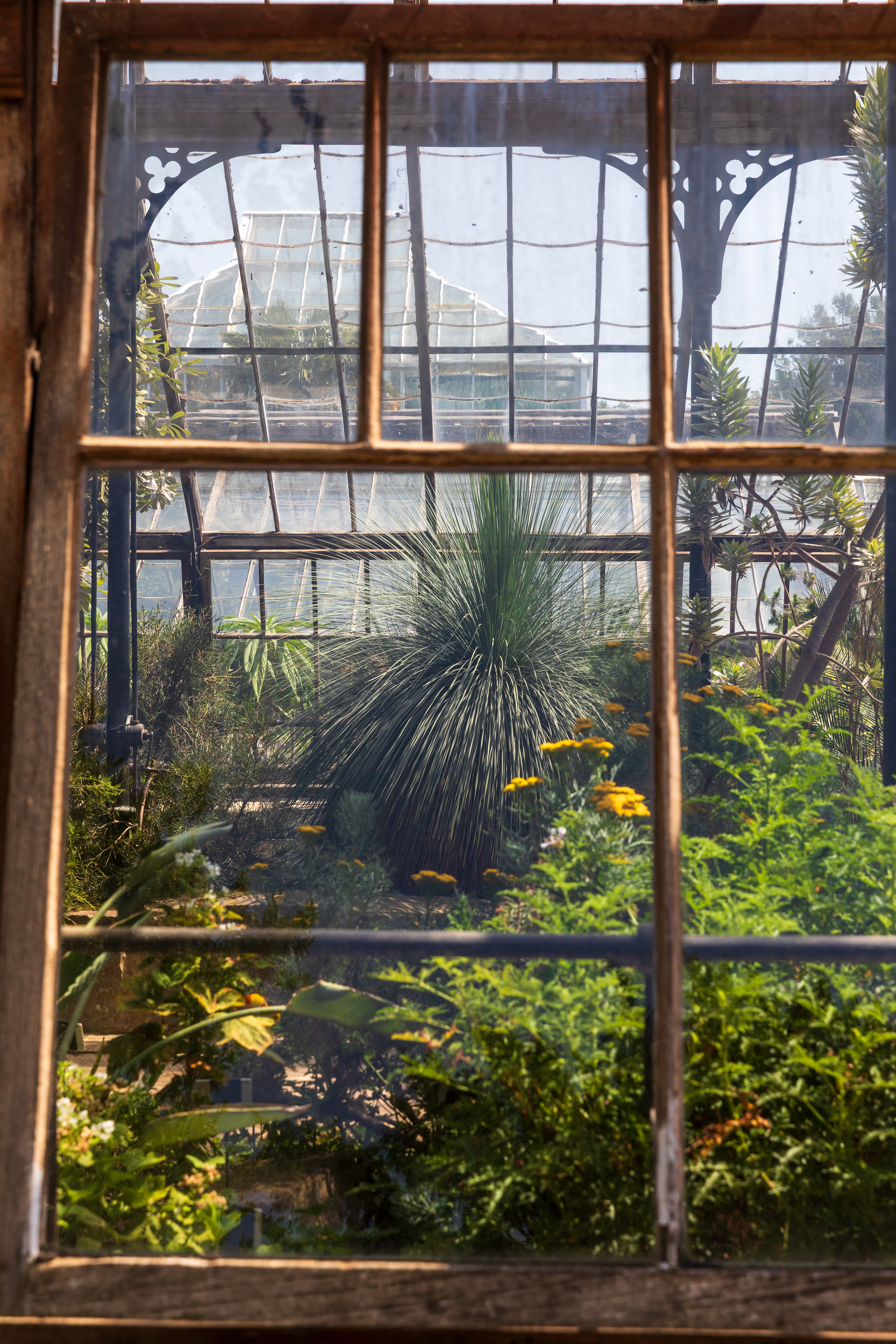
Looking through the glasshouse's original timber-framed windows toward the dry garden beyond, spiky foliage and golden flowers softened by the old, slightly uneven glass.
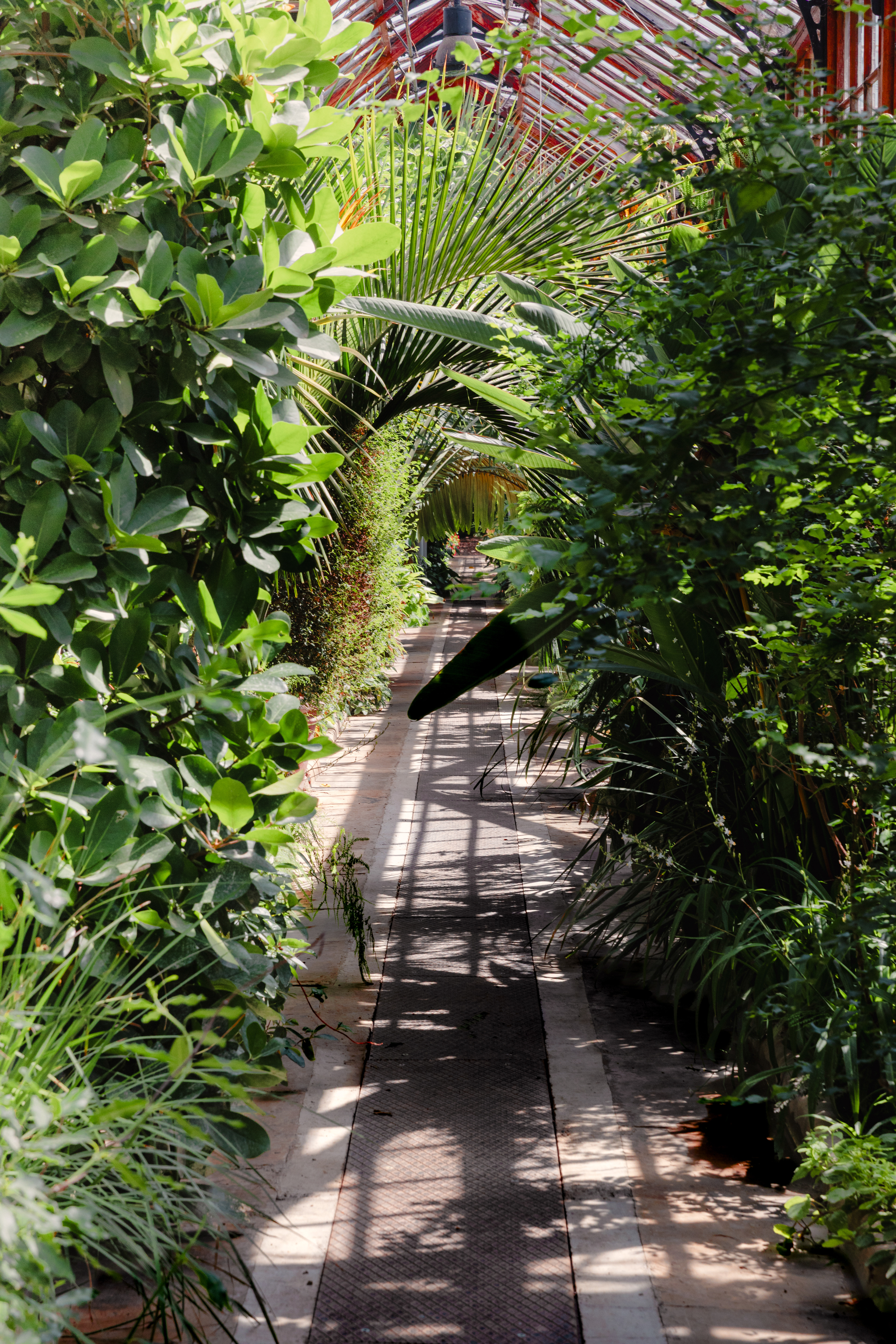
A narrow path beneath arching palm fronds inside the glasshouses, dappled light falling across the stone floor.
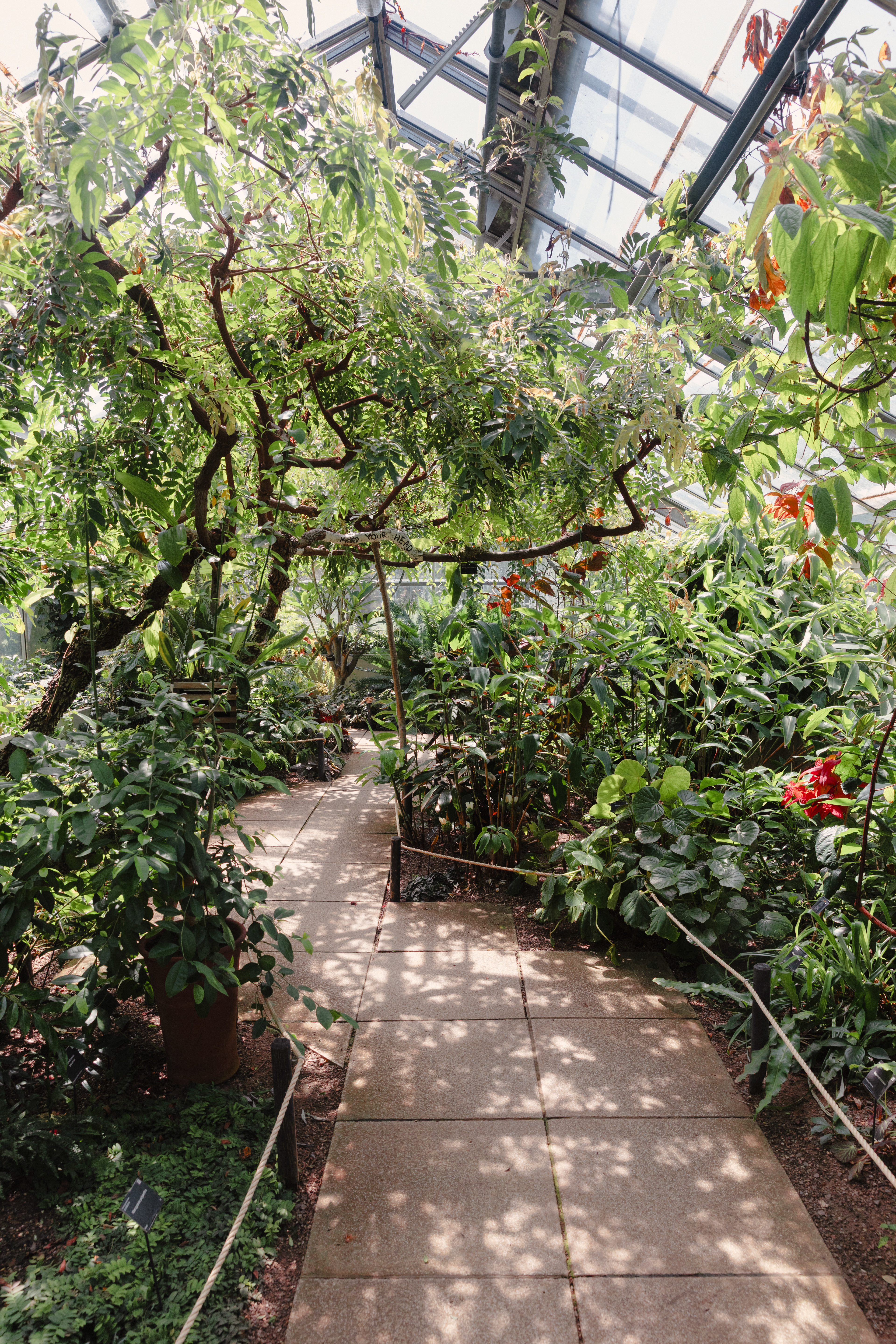
A shaded path winding beneath trained branches and flowering climbers inside the glasshouse range.
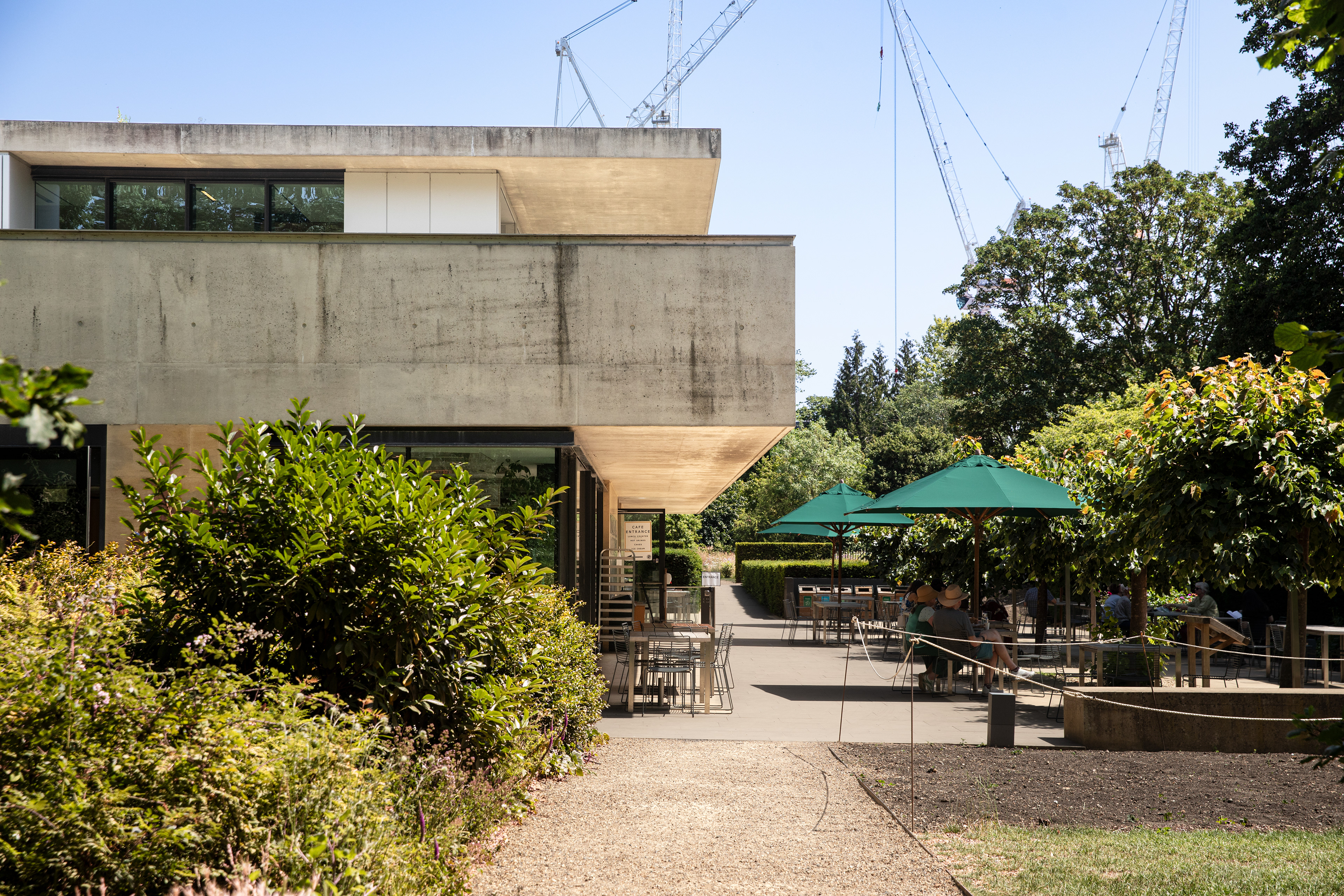
The Sainsbury Laboratory's Garden Café, designed by Stanton Williams and winner of the 2012 RIBA Stirling Prize, its board-marked concrete framing an outdoor terrace at Cambridge University Botanic Garden.
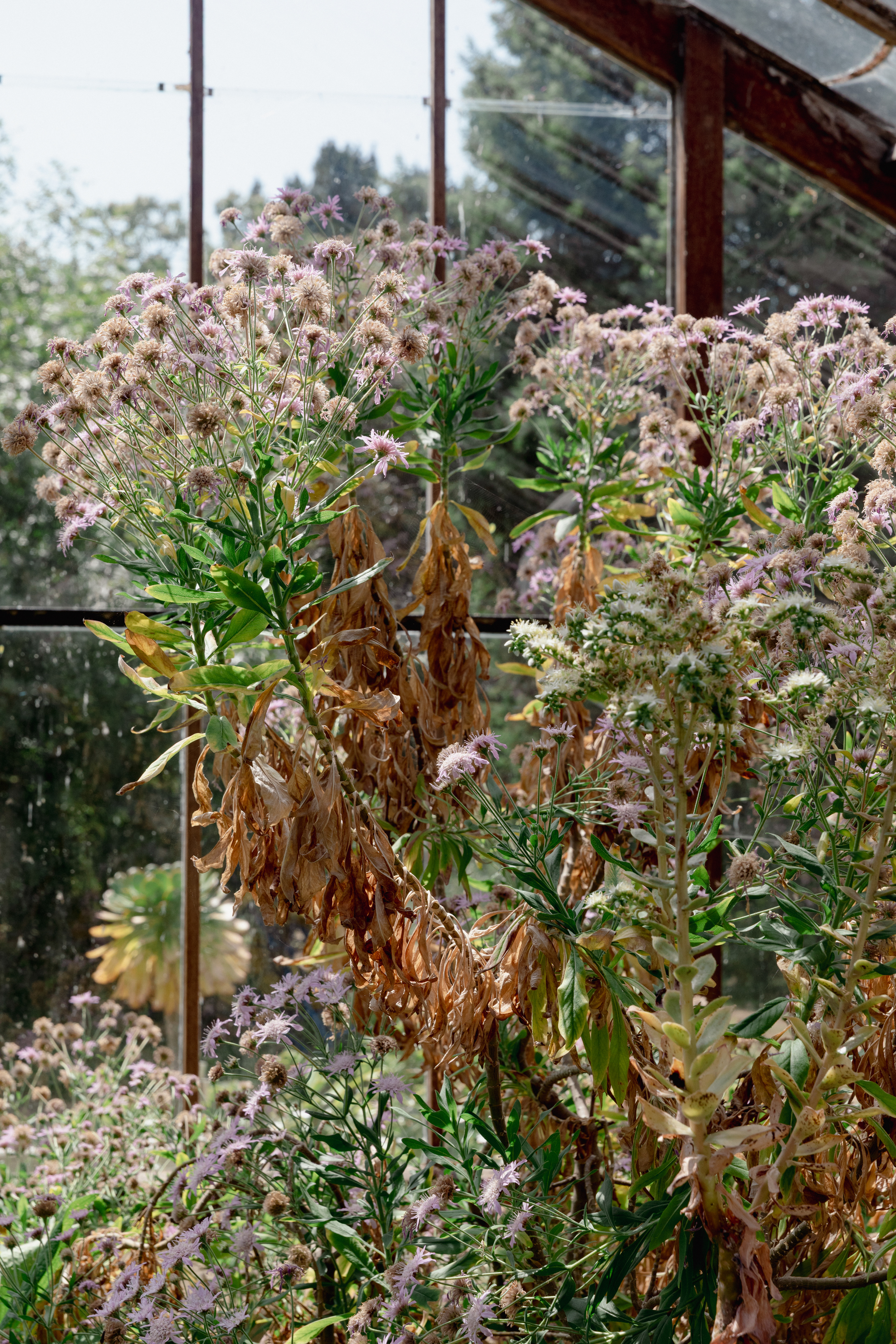
Fading flowerheads catching the last of the summer light against the glasshouse glazing.
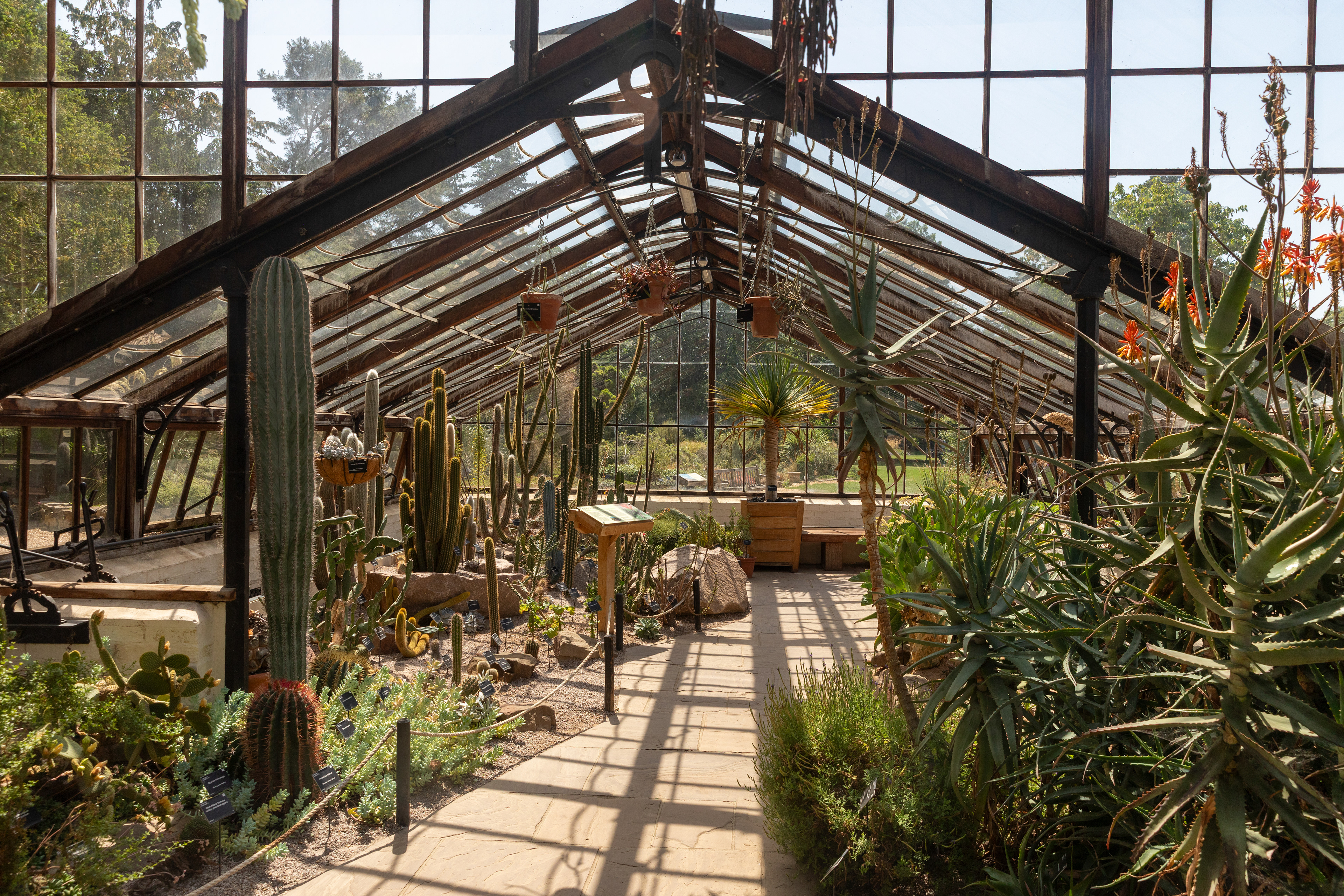
The Arid House, its cacti and aloes catching long shafts of afternoon light through the glass roof.
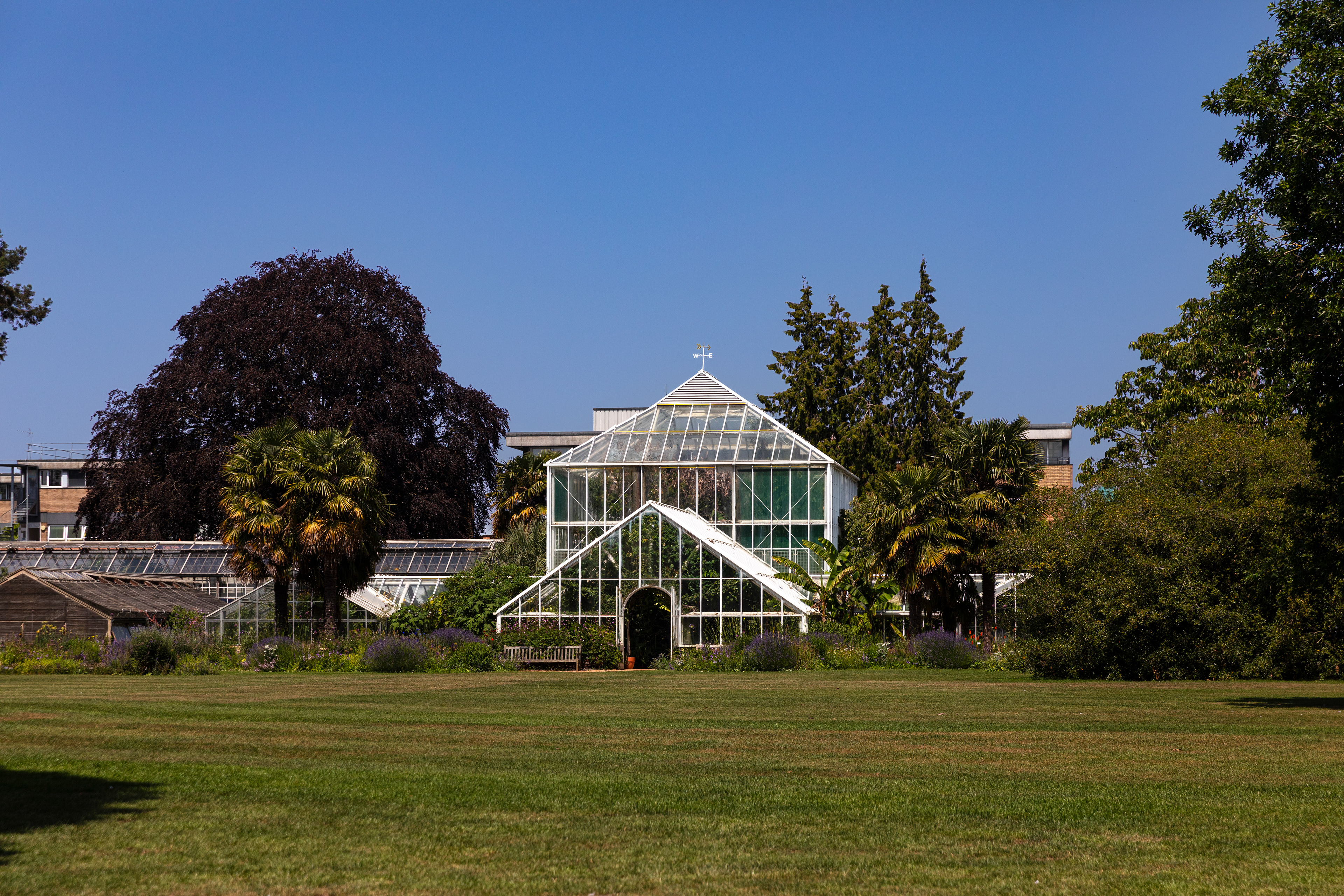
The Glasshouse Range seen across the lawn, its Victorian ironwork and glazing catching the summer sky.
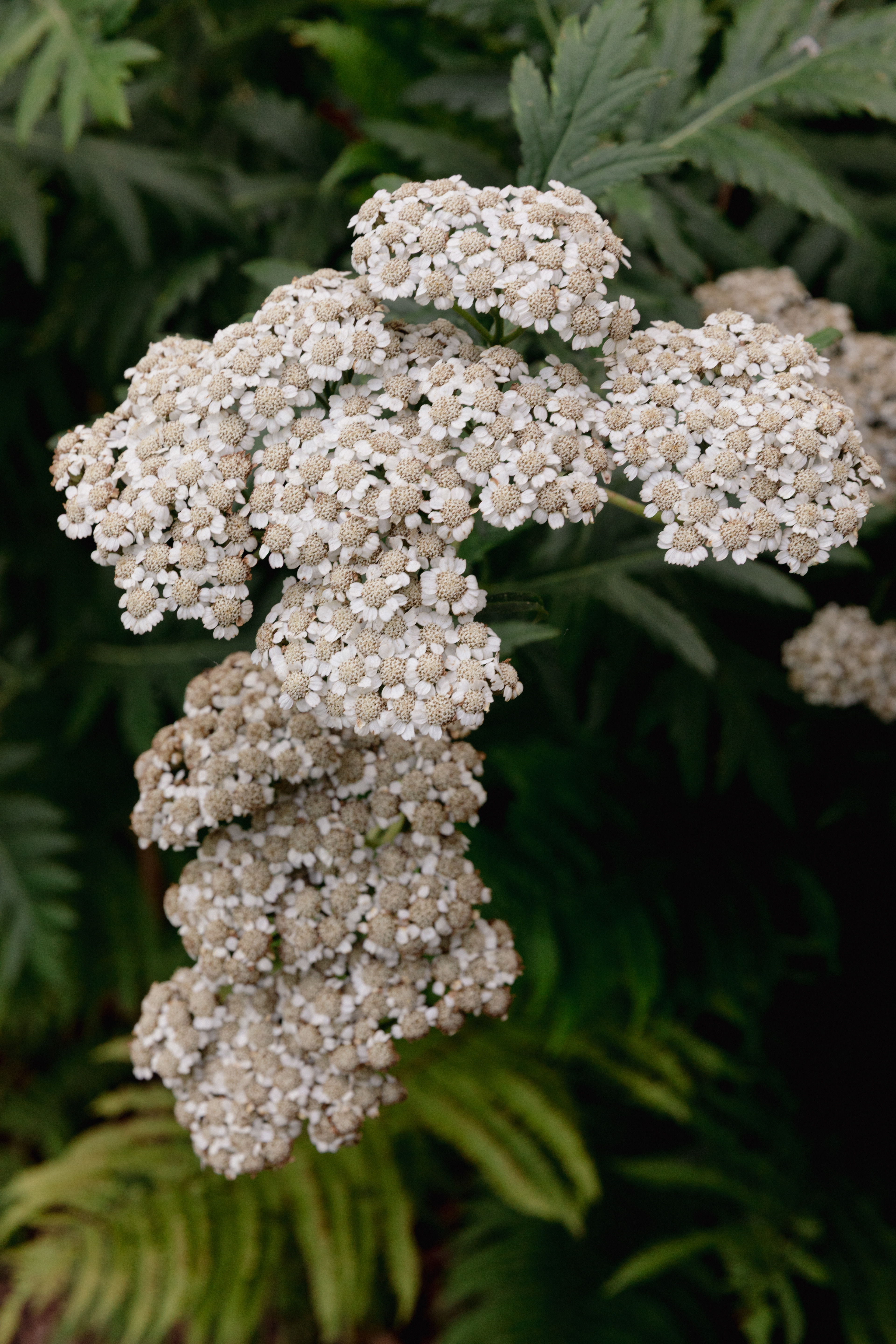
A close study of yarrow in flower, its flattened clusters a study in texture and repetition.
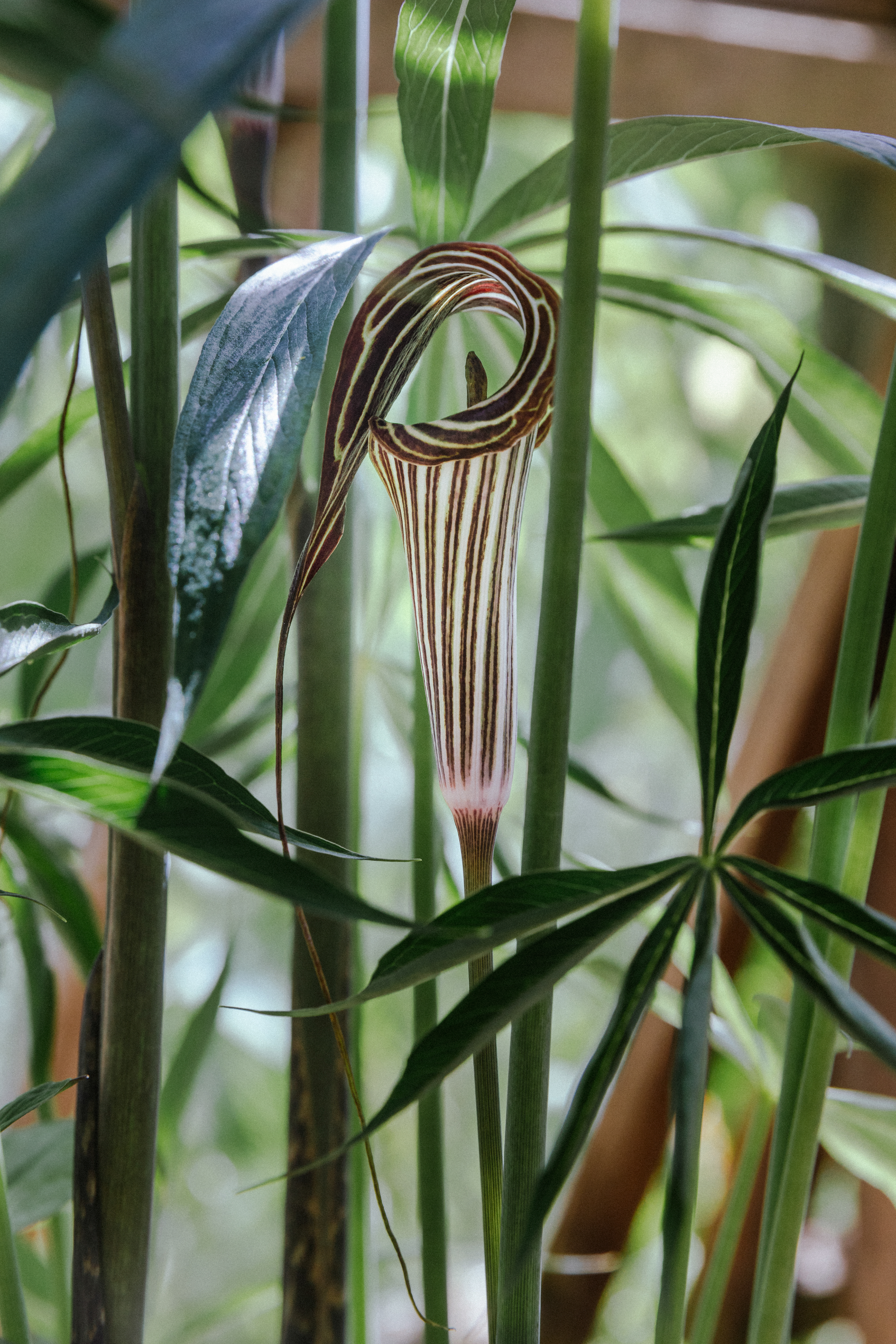
A striped cobra lily (Arisaema) unfurling among the foliage — one of the more theatrical botanical details in the garden.
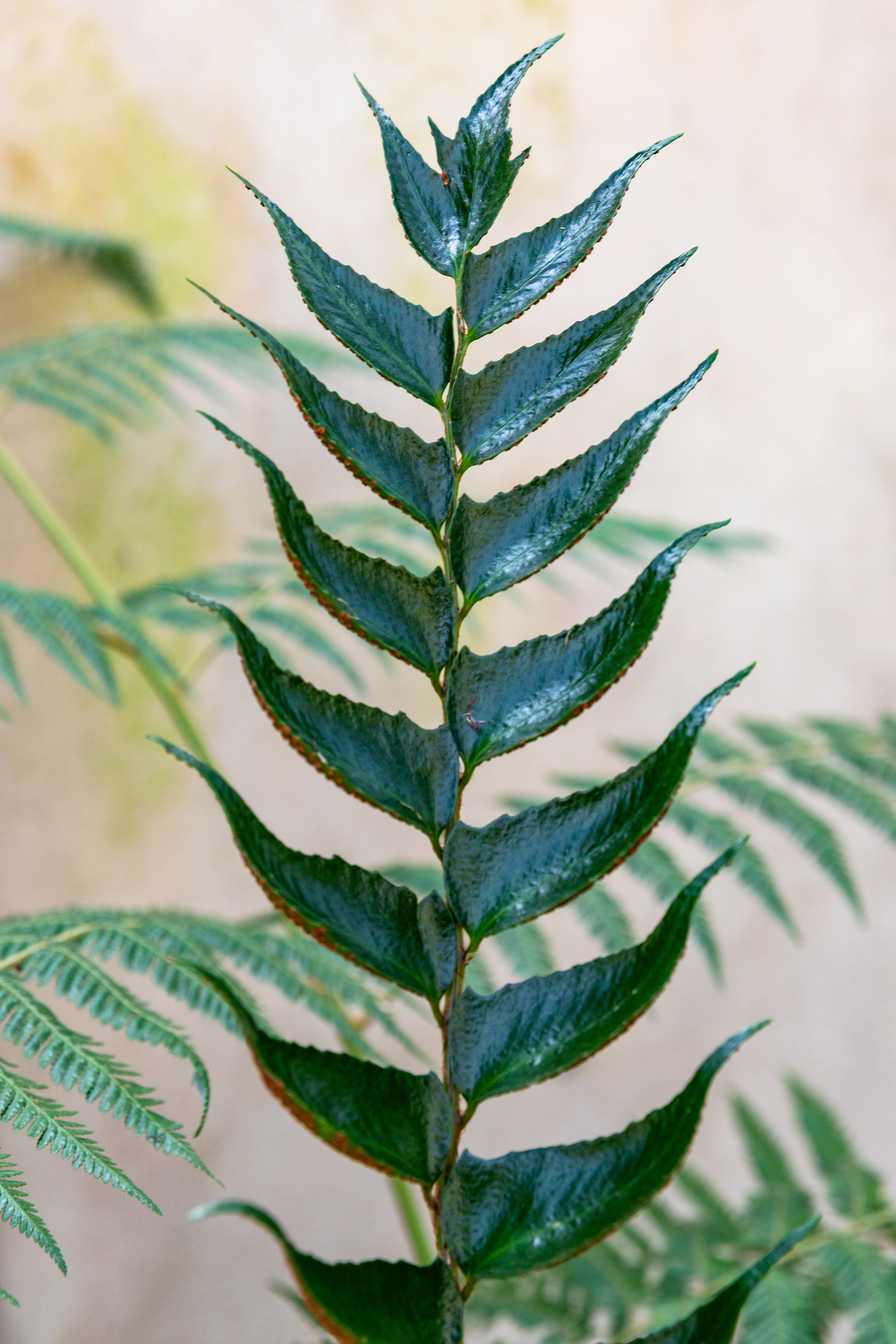
A single fern frond, its glossy leaflets catching soft light.