Ashurbanipal ruled the Assyrian empire from Nineveh between 669 and around 631 BC by most measures the largest empire yet seen, reaching from the Mediterranean to the Iranian plateau. He was also a collector: his palace library gathered thousands of cuneiform tablets, among them a fragment of the Epic of Gilgamesh with a flood story that predates the Book of Genesis by a thousand years. When the British Museum's George Smith translated it in 1872, colleagues said he tore off his coat and ran around the room in disbelief.
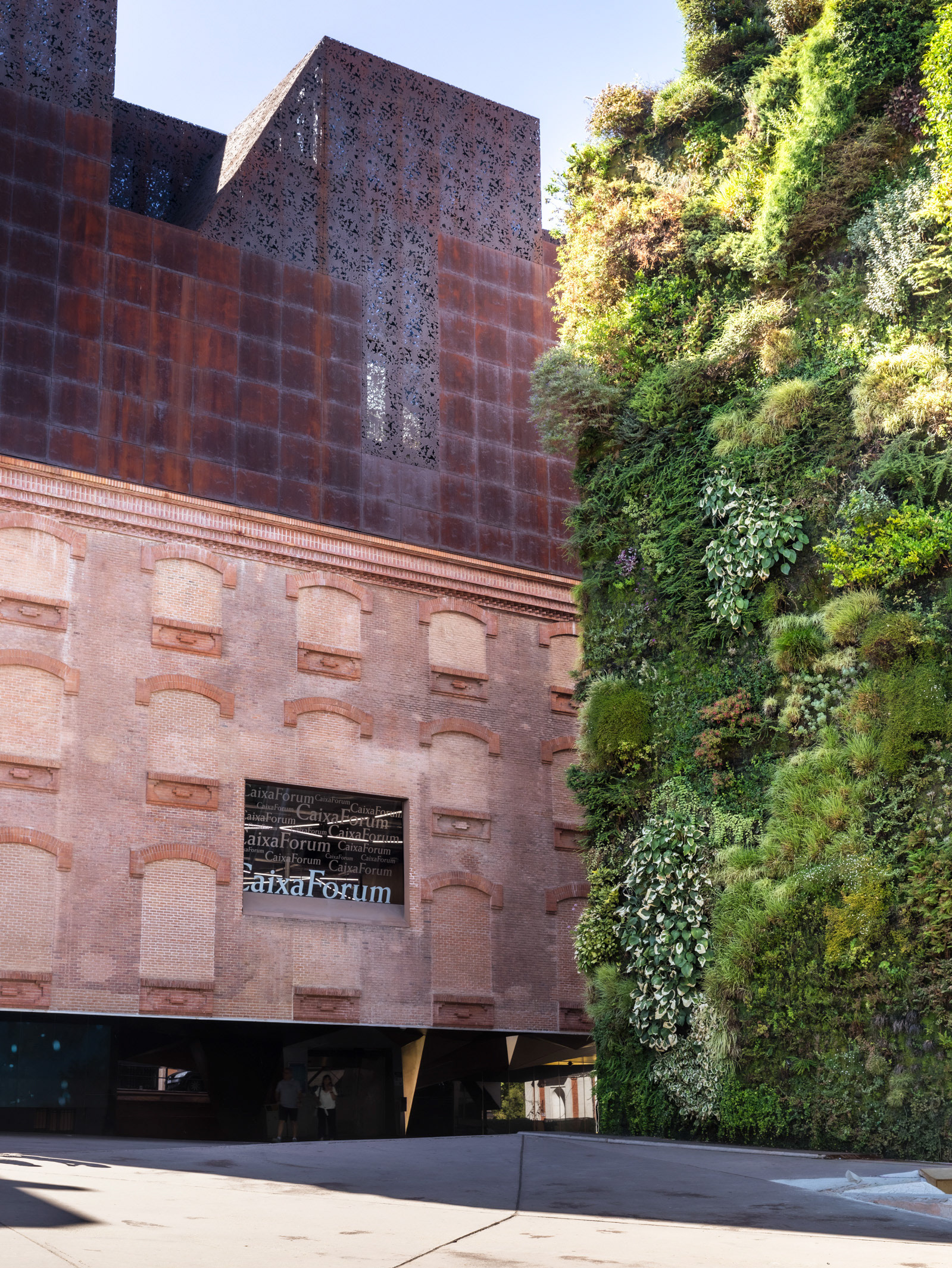
"Soy Asurbanipal, rey del mundo, rey de Asiria" opened at CaixaForum Madrid on 9 April 2026 in collaboration with the British Museum, bringing 158 objects from Nineveh to Madrid until 4 October: lion-hunt reliefs and siege scenes alongside garden reliefs, ivories, and the tablets themselves.
Made in collaboration with CaixaForum Madrid.
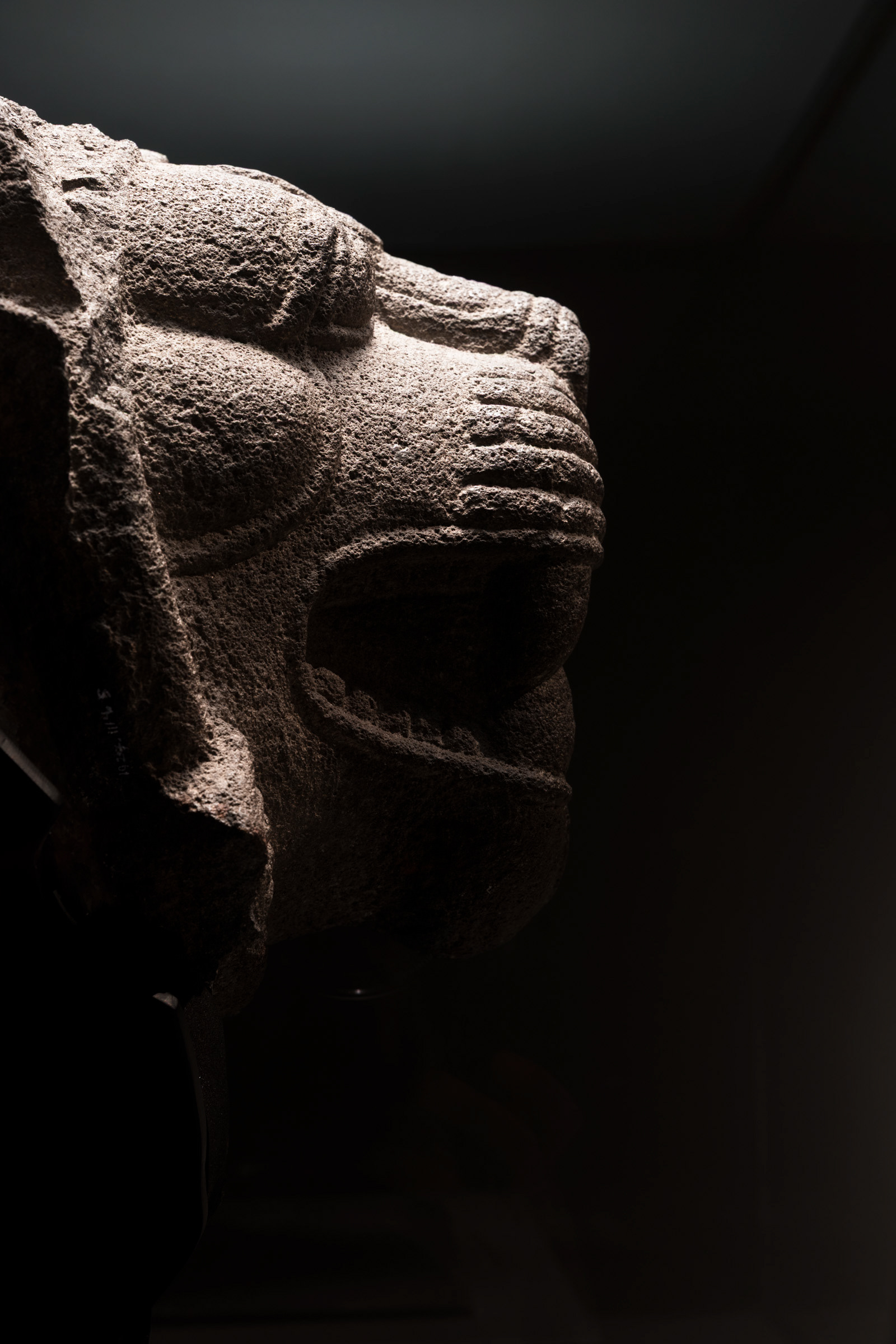
Grey basalt head of a roaring lion, 9th century BCE, Carchemish — from "Soy Asurbanipal, rey del mundo, rey de Asiria," CaixaForum Madrid, in collaboration with the British Museum.
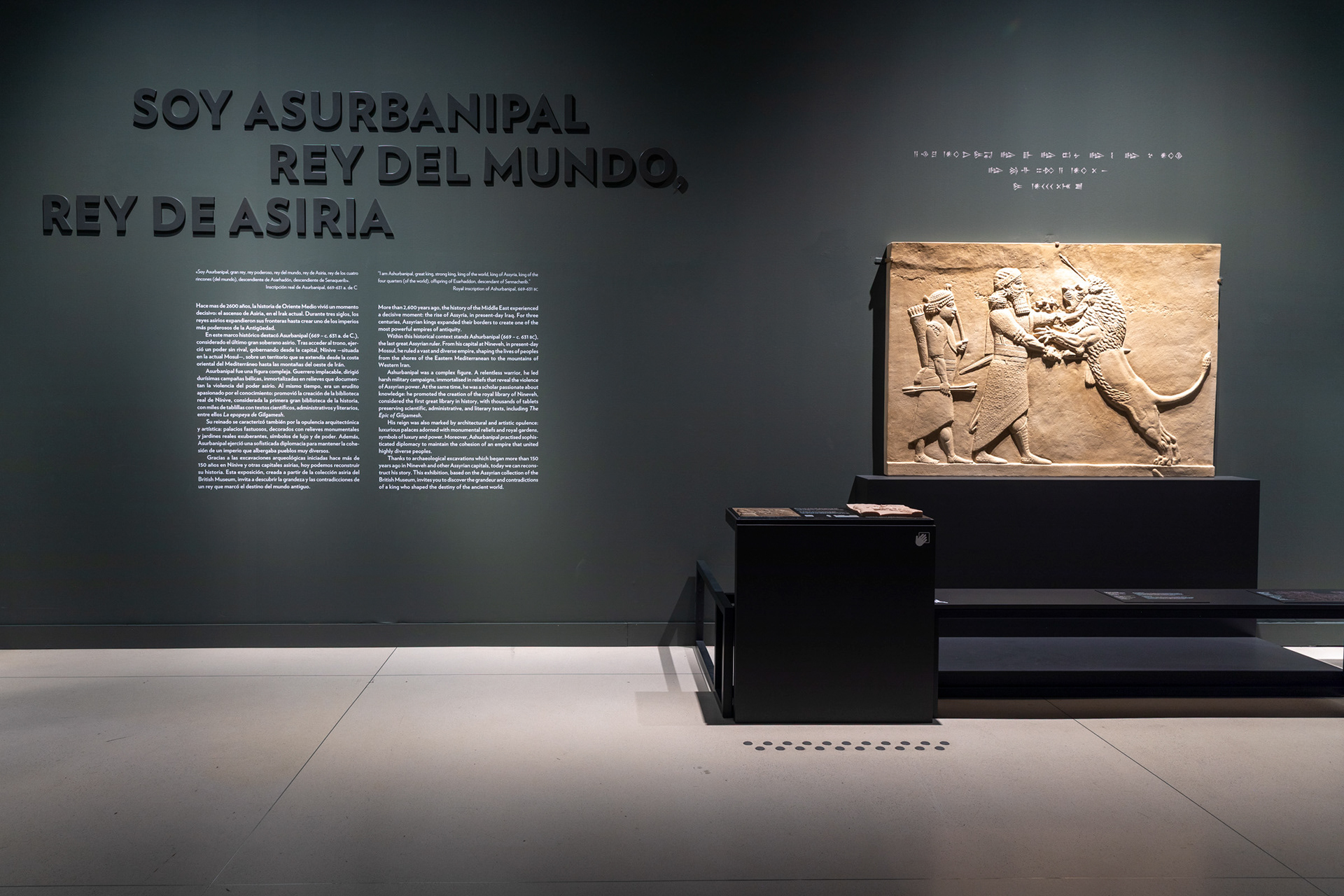
Entrance wall of "Soy Asurbanipal" at CaixaForum Madrid, with introductory text and a lion-hunt relief from the North Palace of Nineveh, c. 645–635 BC.
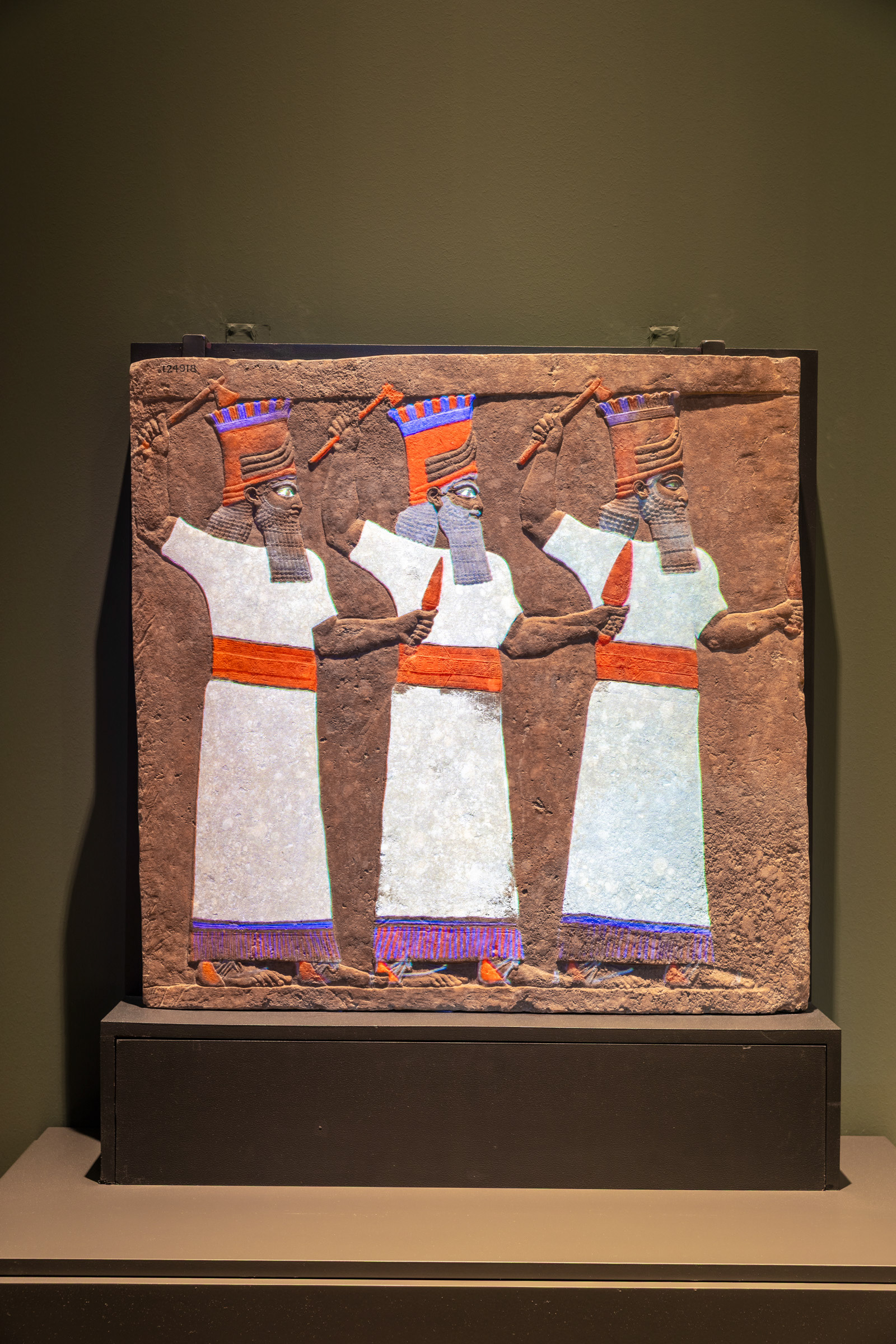
The Sebitti Panel (c. 645–640 BC) on display at CaixaForum Madrid. The vibrant colors are created using projection mapping based on original paint particles found on the ancient Assyrian relief.
![The Hamanu Relief (c. 645–640 BC) on display at CaixaForum Madrid. This striking Neo-Assyrian palace panel captures the brutal siege of an Elamite fortress and the subsequent deportation of its citizens. [1] (https://www.britishmuseum.org/collection/object/W_1856-0909-17-18_2), [2] (https://en.wikipedia.org/wiki/Ashurbanipal)](https://cdn.myportfolio.com/b02af598-92af-43ab-8277-a29c94b1ff1c/8f424909-95fa-47d3-bdbd-63ecc95899ff_rw_1920.jpg?h=369e3a59afb74edabbbf7a9703c7a8ef)
The Hamanu Relief (c. 645–640 BC) on display at CaixaForum Madrid. This striking Neo-Assyrian palace panel captures the brutal siege of an Elamite fortress and the subsequent deportation of its citizens. [1] (https://www.britishmuseum.org/collection/object/W_1856-0909-17-18_2), [2] (https://en.wikipedia.org/wiki/Ashurbanipal)
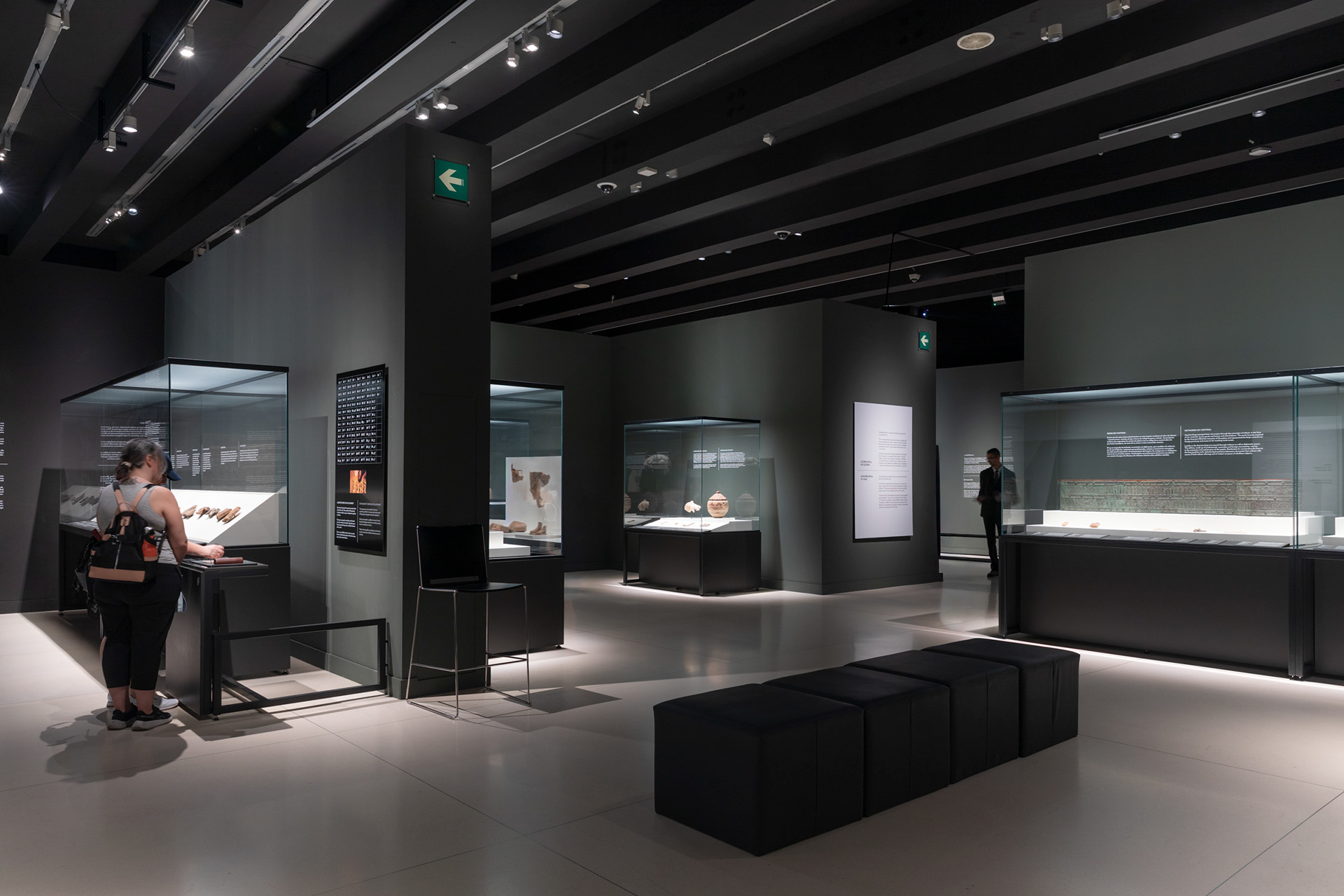
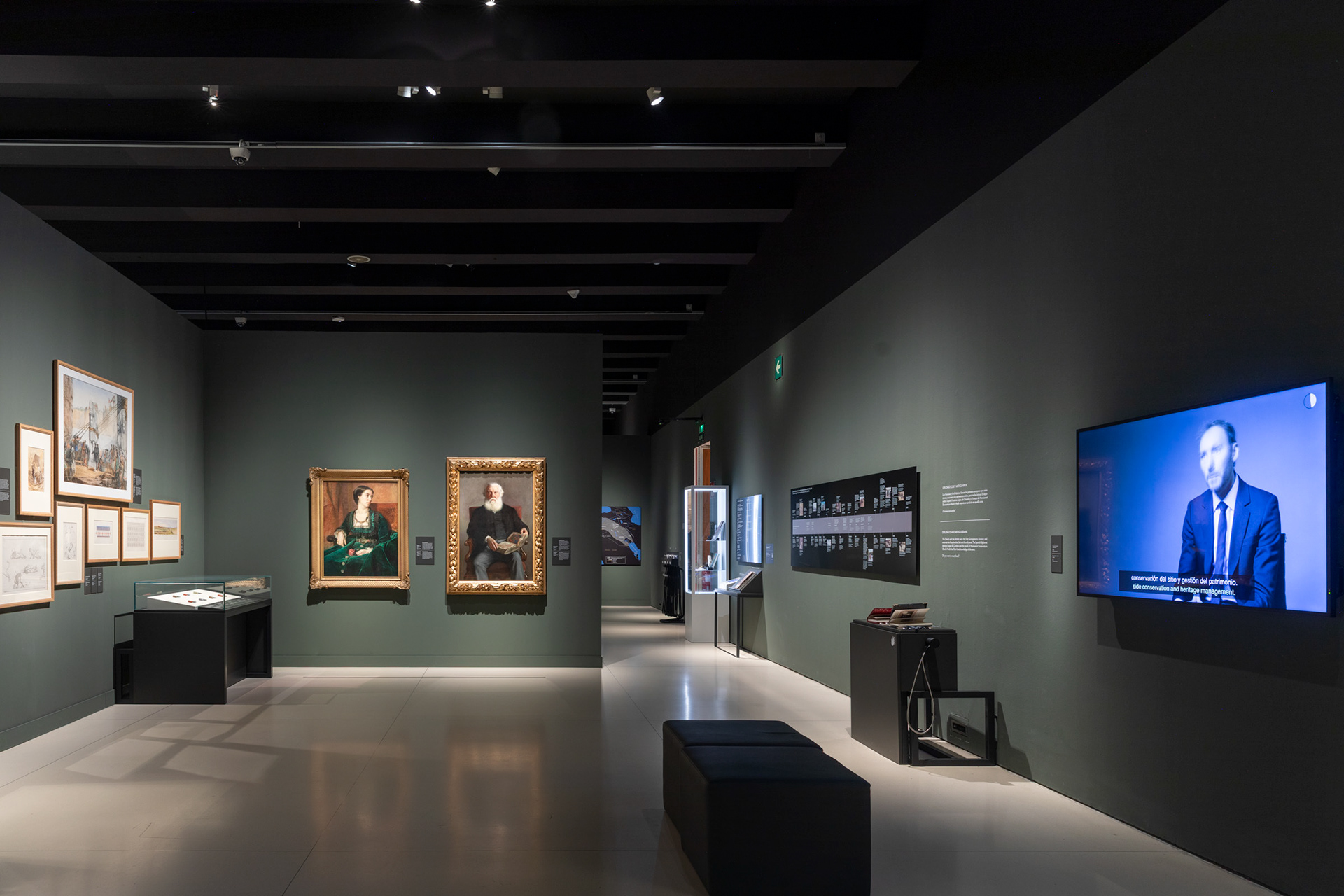
Gallery view of the "Soy Asurbanipal, rey del mundo, rey de Asiria" exhibition at CaixaForum Madrid (2026).
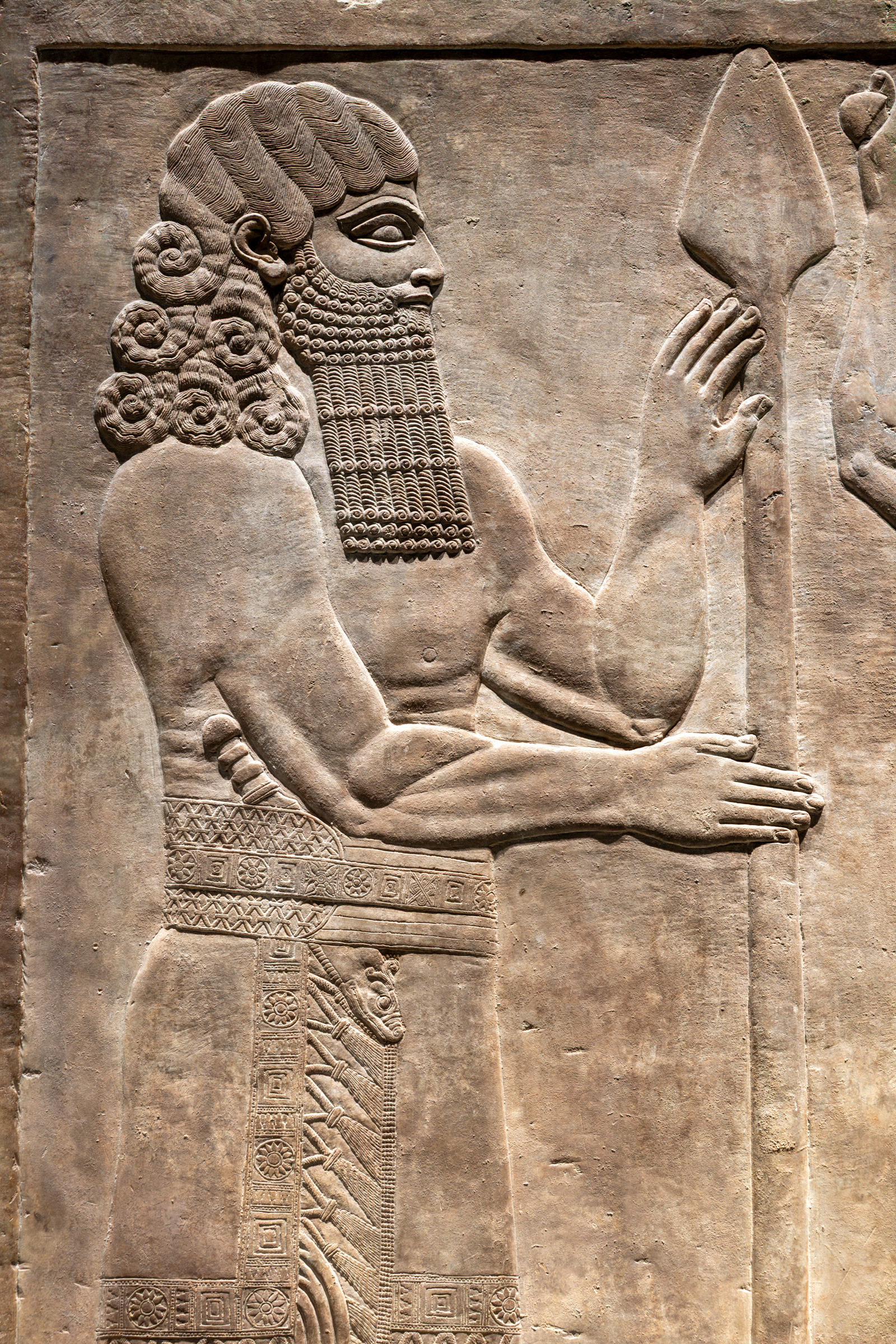
A Lahmu spirit relief (c. 645–640 BC) featured in the "Soy Asurbanipal" exhibition at CaixaForum Madrid, on loan from the British Museum.
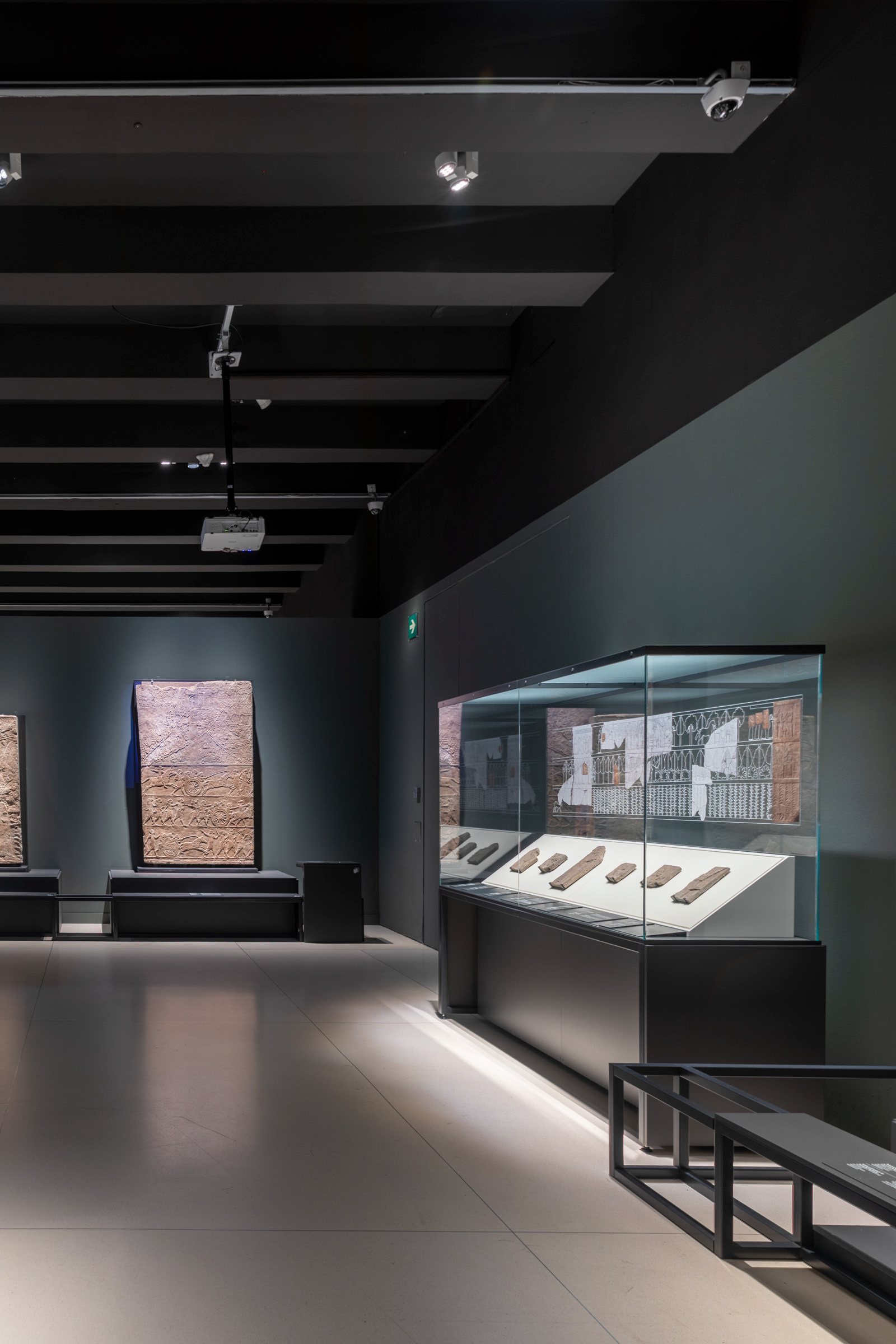
The Cuneiform Archive display within the "Soy Asurbanipal" exhibition at CaixaForum Madrid (2026).
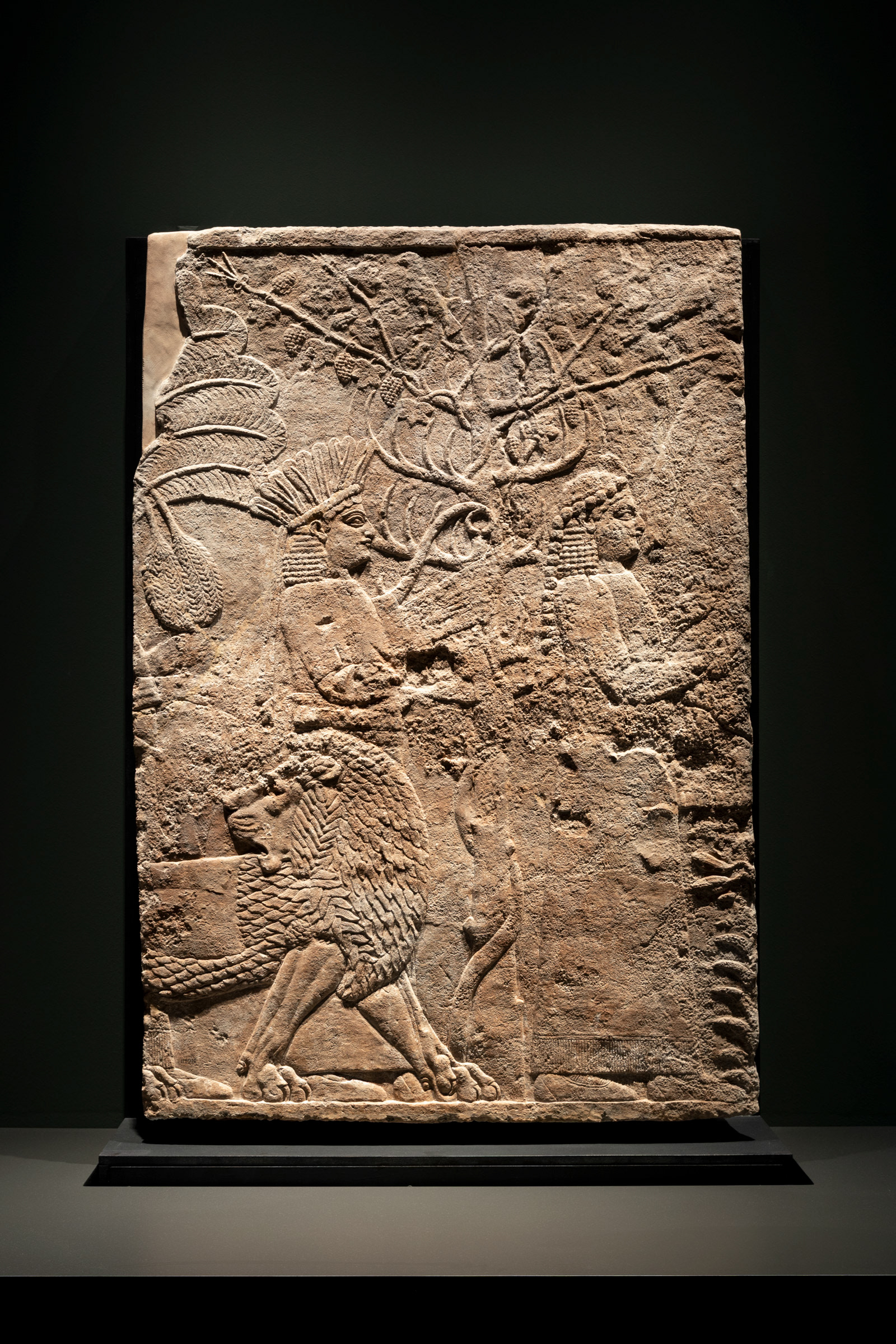
Relief of court musicians and a tame palace lion (c. 645–635 BC) featured in the "Soy Asurbanipal" exhibition at CaixaForum Madrid, on loan from the British Museum.
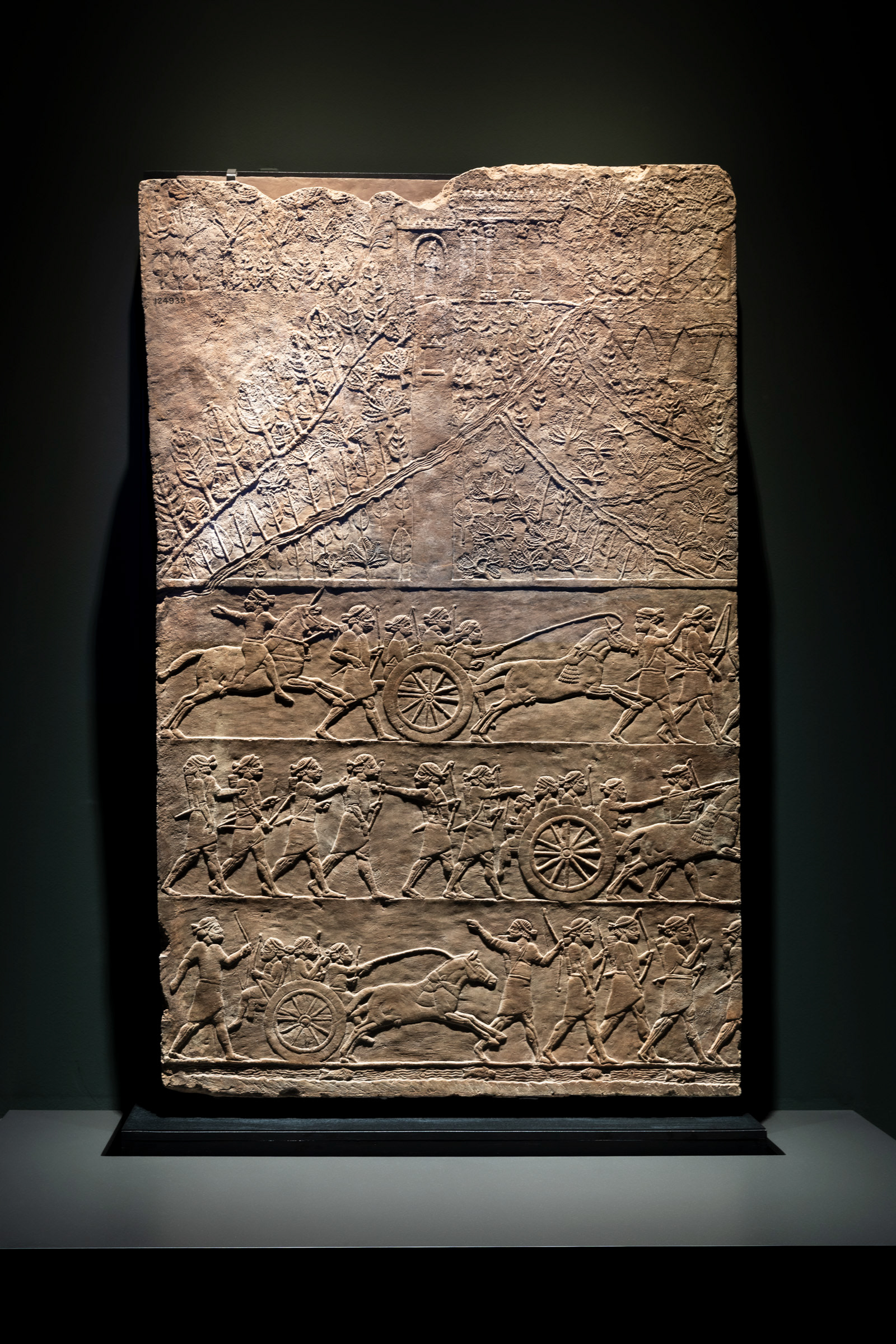
The Gardens and Procession Relief (c. 645–635 BC) featured in the "Soy Asurbanipal" exhibition at CaixaForum Madrid, on loan from the British Museum.
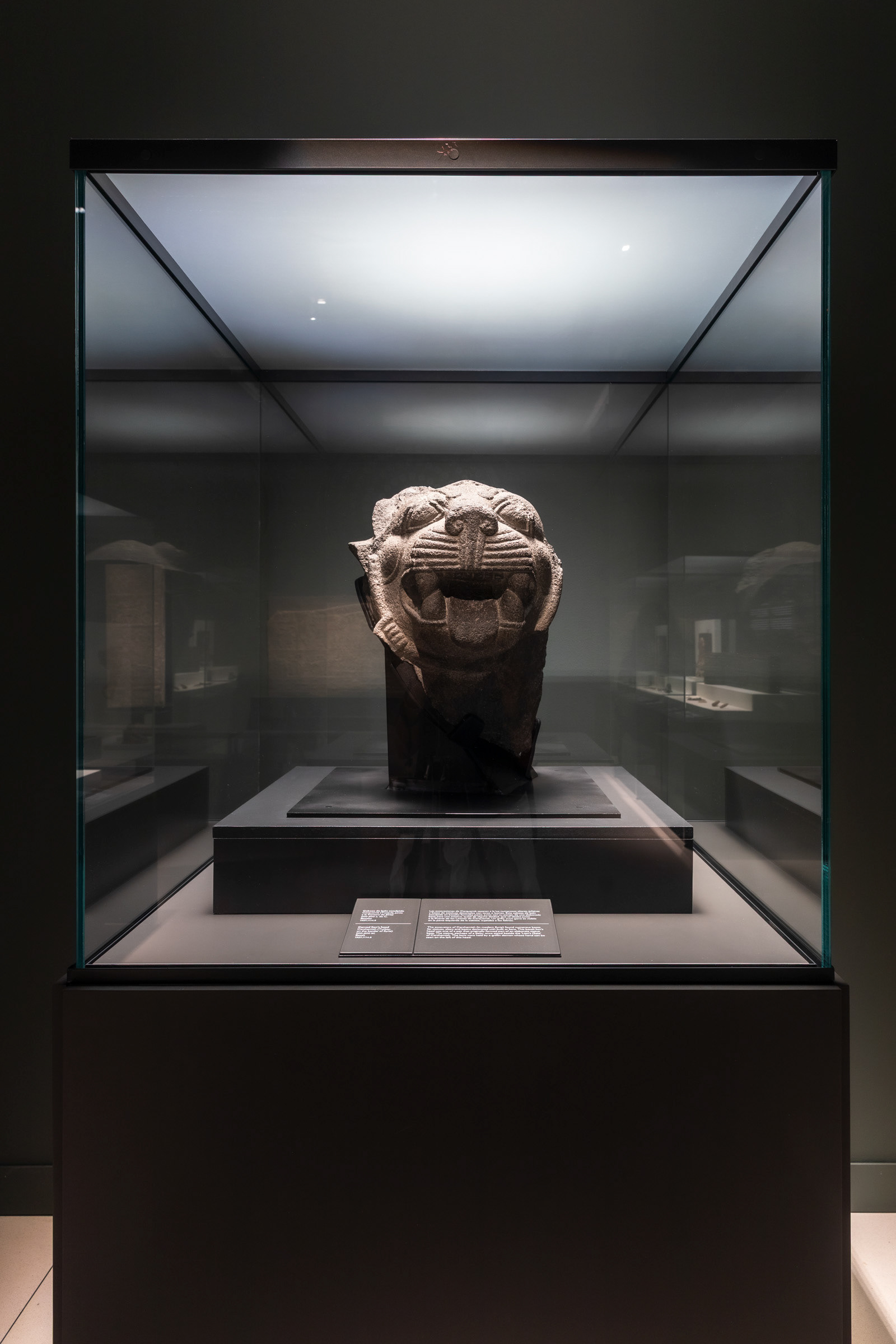
Grey basalt head of a roaring lion, 9th century BCE, Carchemish — from "Soy Asurbanipal, rey del mundo, rey de Asiria," CaixaForum Madrid, in collaboration with the British Museum.
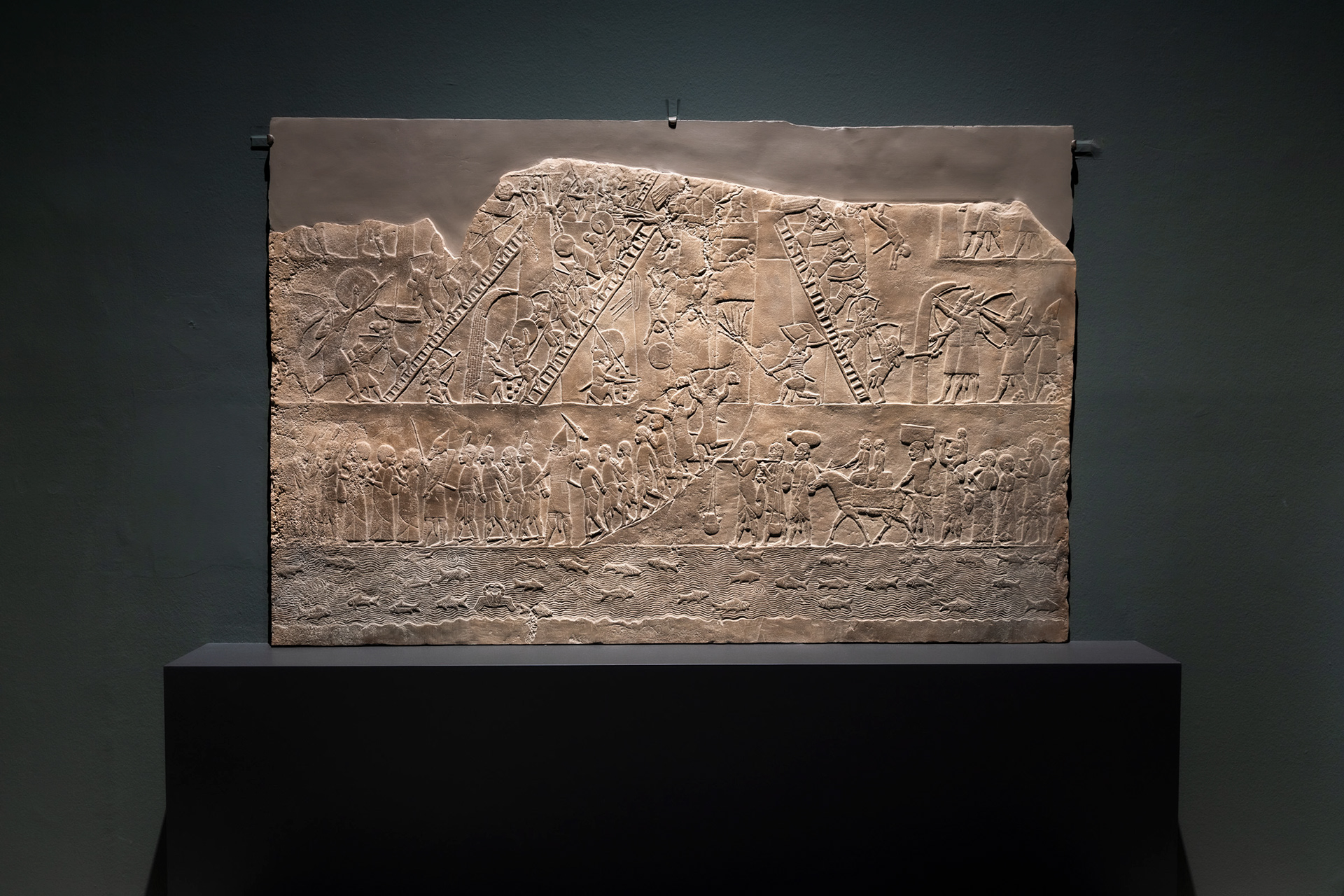
The Egyptian Campaign Relief (c. 645–635 BC) at CaixaForum Madrid. This multi-tiered masterpiece from Nineveh highlights the meticulous detail Neo-Assyrian artists used to record royal conquests and geographic landscapes.
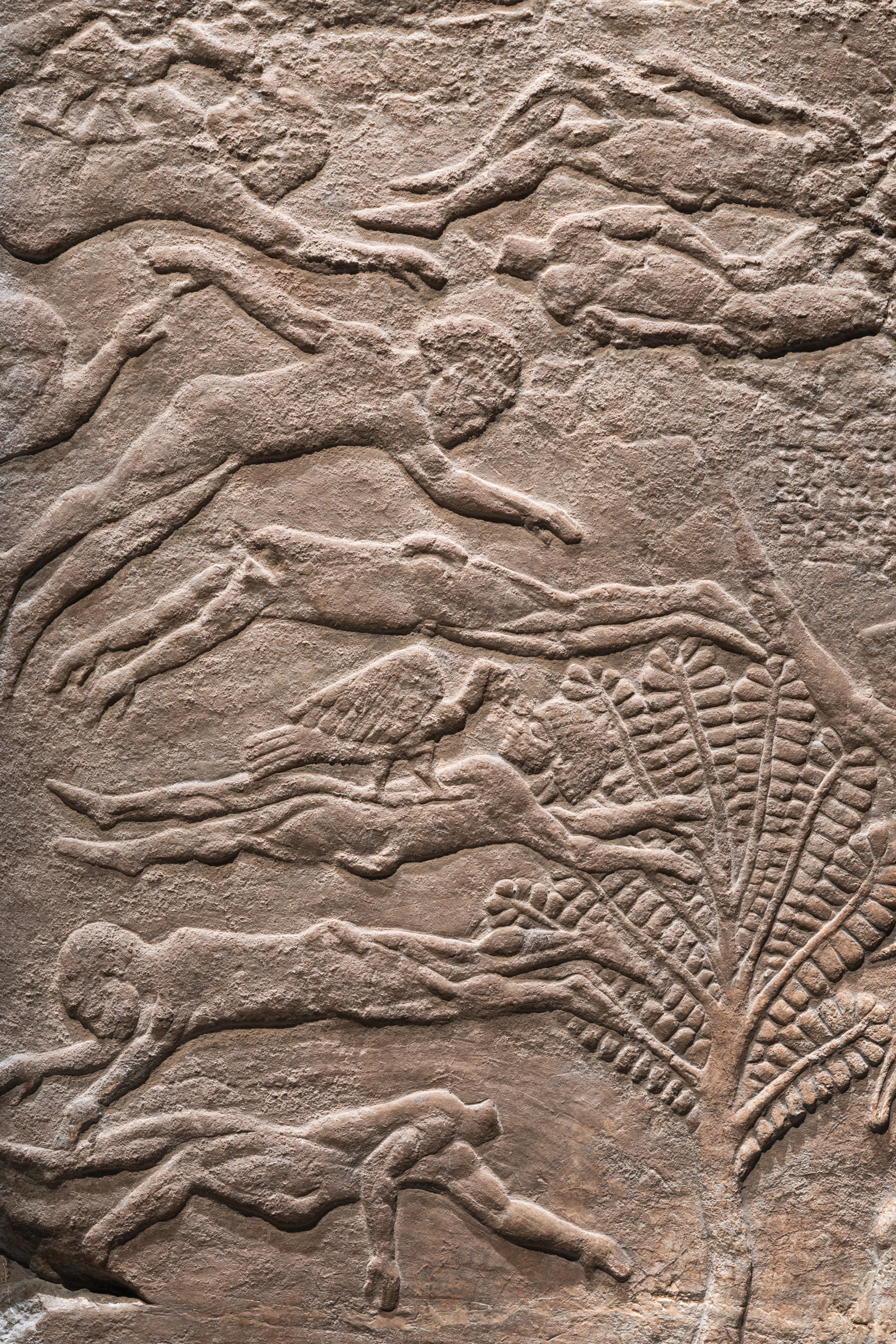
Detail of the Battle of Til-Tuba relief (c. 660–650 BC) featured in the "Soy Asurbanipal" exhibition at CaixaForum Madrid, on loan from the British Museum.
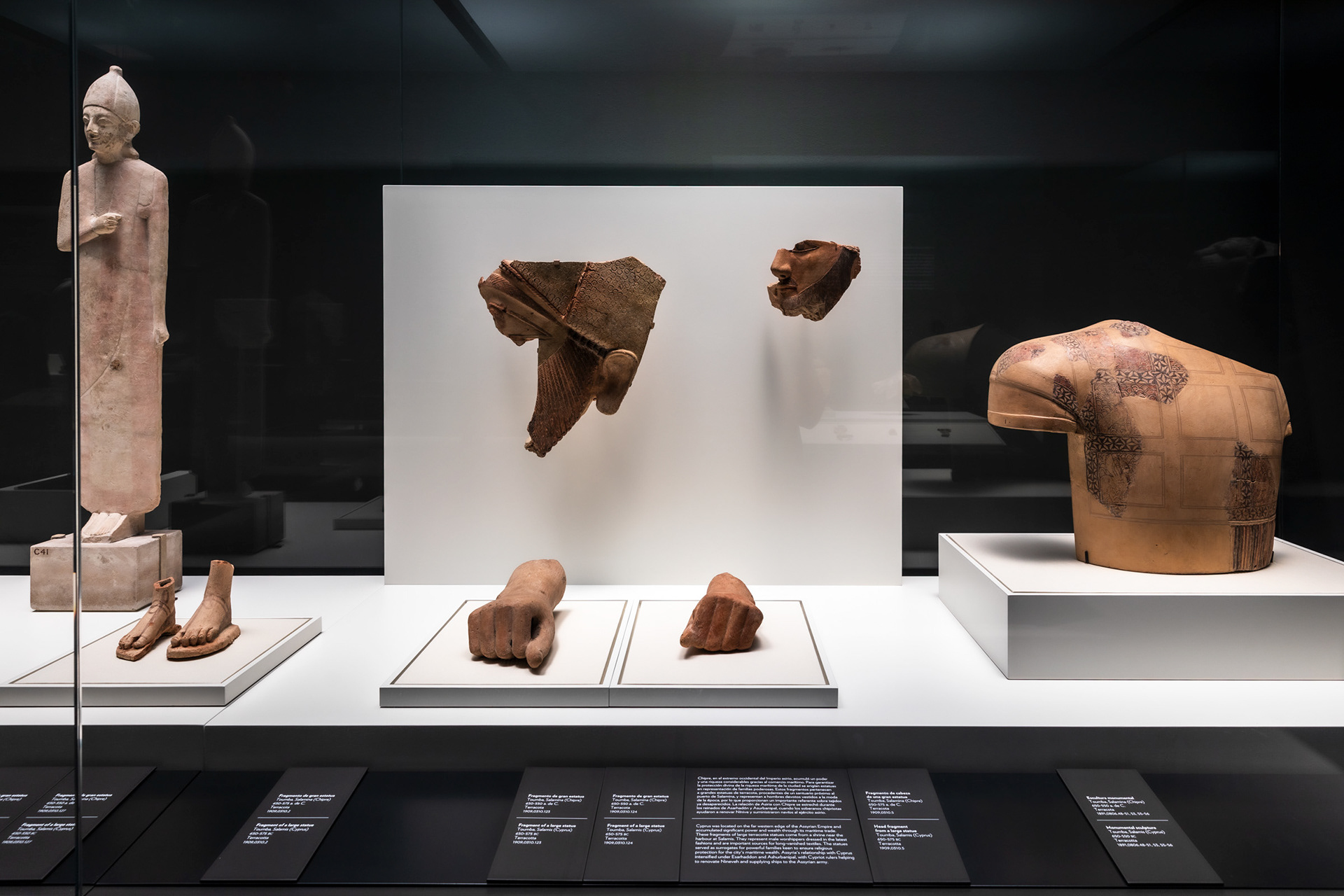
Sculptural fragments and terracotta figures on display in the "Soy Asurbanipal" exhibition at CaixaForum Madrid (2026).